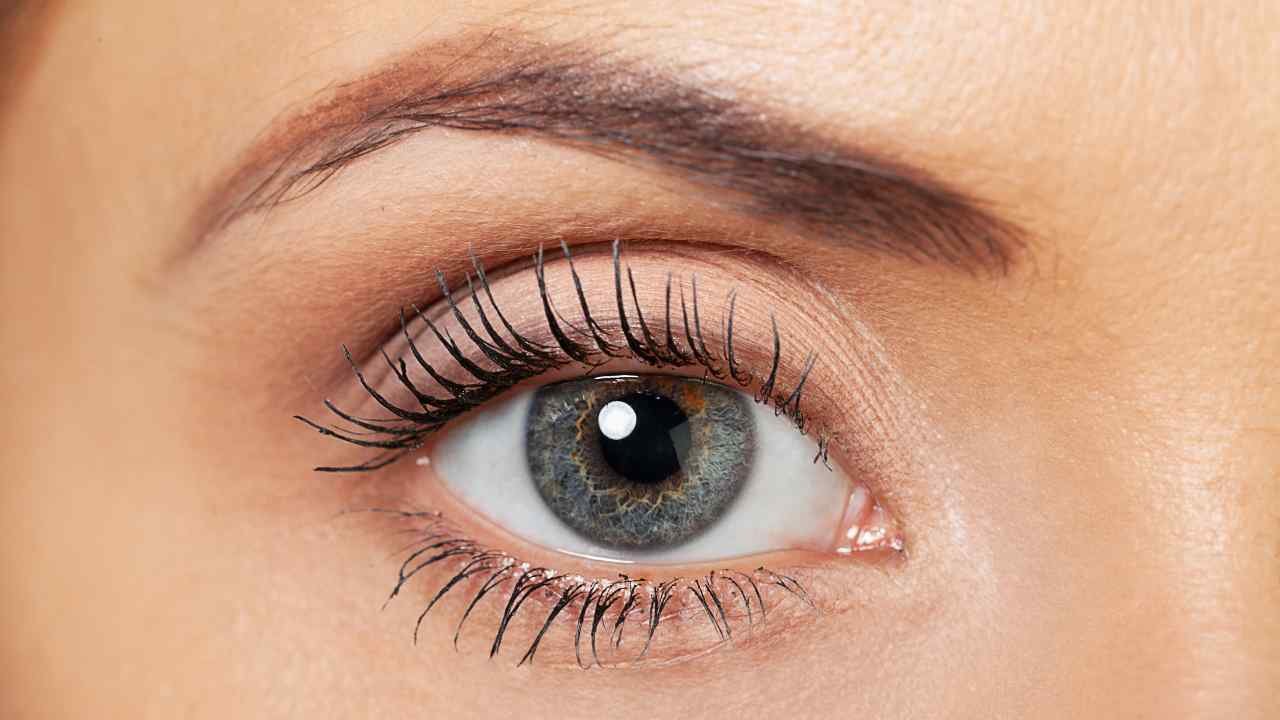
Have you ever thought about how a small, round organ in your face allows you to see a colourful and detailed world? The human eye, one of our five sensory organs, often called a “living camera,” is a masterpiece of design that not only lets us see but also reflects our health, emotions, and even genetics.
Click here to Read the Telugu version of this article.
Almost spherical in shape, the eye rests in the bony cavity of the skull called the orbit and is moved by six tiny muscles. Eyelids, eyelashes, and a thin film of tears protect it from dust and dryness.
On the outside, the conjunctiva covers the front, while the sclera forms the white structure. The cornea, a clear dome-shaped front, provides most of the focusing power. Just behind it, lies the aqueous humour, a fluid-filled chamber that nourishes the cornea and lens.

The coloured ring, or iris, controls light entering through the pupil, which is the small black opening at its centre. Behind it, the lens bends light onto the retina at the back of the eye. The retina, packed with over 120 million rods for low-light vision and 6 million cones for colour and detail.
Vision is a step-by-step process. Light enters the eye through the cornea, which bends it to start focusing. It then passes through the pupil, and the lens fine-tunes the focus, directing the light onto the retina at the back of the eye. The retina converts this light into electrical signals, which travel through the optic nerve to the brain. Finally, the brain processes these signals, allowing us to see and interpret our surroundings.
Eye colour is fascinating too. About 79% of people worldwide have brown eyes due to higher levels of melanin in the iris, while blue, green, hazel, and amber are rarer, found especially in Europe.

Good nutrition keeps eyes healthy. Vitamin A prevents night blindness, while vitamins C and E protect against cataracts and age-related damage. Omega-3 fatty acids help retinal function and tear production.
Yet eyes are vulnerable. Cataracts cloud the lens, conjunctivitis (or Pink eye) inflames the outer membrane, glaucoma damages the optic nerve, and refractive errors like myopia and hyperopia blur vision. Health experts say nearly 80% of vision problems worldwide can be prevented or treated with timely care.
The human eye is more than just an organ. It is our window to the world. Tears lubricate and protect it, muscles move it, and the brain completes the picture. Without vision, daily life would be very different. Truly, the eye is one of nature’s finest masterpieces.

📢 Do we value our eyes enough, or do we only start caring for them when problems begin to appear?
💬 So, what’s your opinion? Comment below!