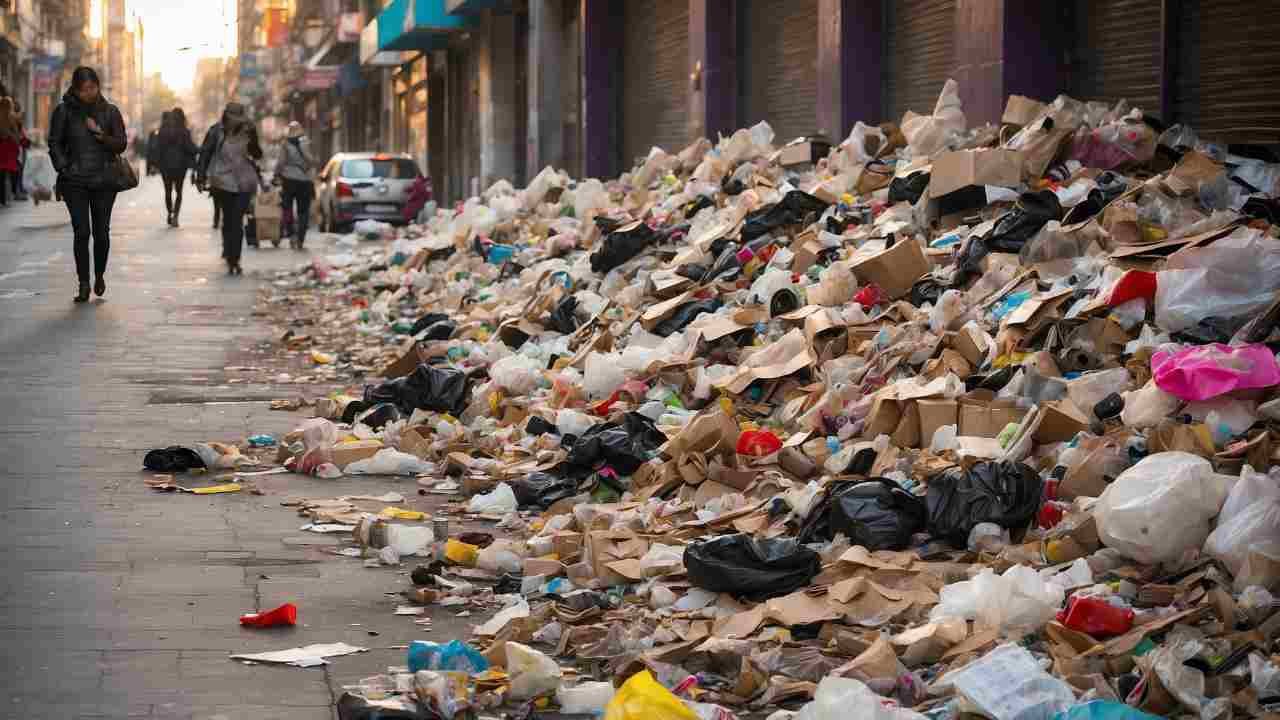
Do you know where the trash you throw every day actually goes? Does it really go anywhere, or is it just piling up around us? This is the very problem of solid waste.
Click here to Read the Telugu version of this article.
Solid waste means the unwanted materials generated from human activities in households, industries, commerce, medical, and agricultural sectors. These include garbage, plastics, paper, glass, metals, food residues, construction debris, and electronic waste.

If solid waste is not properly managed, it leads to pollution of land, water, and air, creating threats to both the environment and human health. It reduces soil fertility, contaminates water bodies, and releases toxic gases.
In India, about 17,600 metric tons of waste is generated daily, which amounts to 62 million tons per year. Of this, nearly 43 million tons (70%) is collected, and about 12 million tons is treated. The rest is dumped on the outskirts of cities.

According to a Central Pollution Control Board (CPCB) report, the cities producing the most solid waste are Delhi, Mumbai, Chennai, and Hyderabad. The states generating the highest waste are Maharashtra and Uttar Pradesh. Rising population, urbanization, consumer lifestyles, and technological advancements are further worsening the problem.
So, what is the solution? Solid waste management. This involves scientific collection, segregation, transportation, treatment, and safe disposal of waste. With the ‘3R’ principle – Reduce, Reuse, Recycle, alongside composting, recycling, and biogasification methods, waste can be turned into wealth while protecting the environment.
But the question remains – if we don’t control our waste today, won’t our Earth be drowning in garbage tomorrow?
🗑️ If you suggest even a small solution to the solid waste problem, it can bring a big change.
💡 What’s your idea? 💬Comment below…