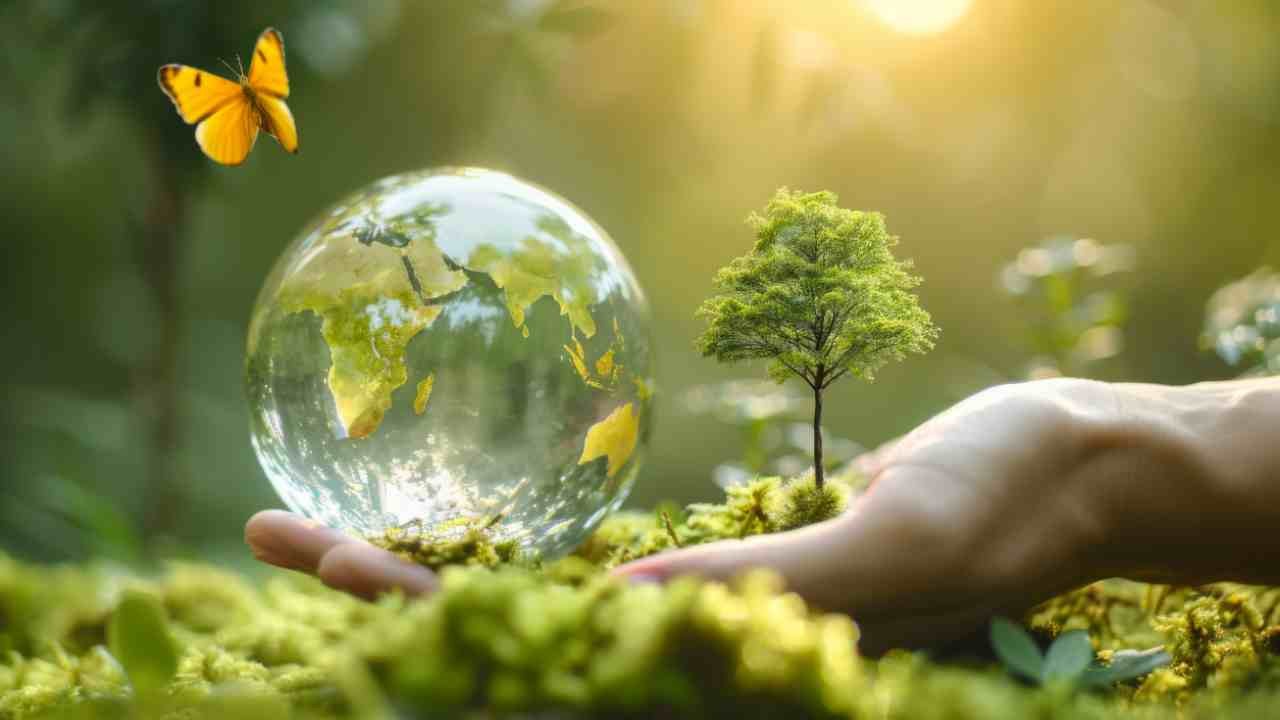
Have you ever thought about how deep our connection with nature is? Every living being shares an inseparable bond with its surrounding environment. But this bond began to be studied systematically through a new science called “Ecology”. The term was first used by Reiter in 1868 and later popularized by the scientist Ernst Haeckel in 1886.
Click here to Read the Telugu version of this article.
In Greek, Ecos means “home” or “dwelling,” and Logos means “study.” So, Ecology is defined as the science of studying habitats. Initially, this field studied only the surroundings of organisms, which is why it was called Ecology. Later, it expanded its scope to include abiotic factors such as light, heat, air, water, and biotic factors such as plants and animals.

Eugene Odum is called the “Father of Ecology,” and for paving a new path in this science, he is also known as the “Father of Modern Ecology.” In India, Ramdeo Misra is recognized as the “Father of Indian Ecology” for his immense contributions to this field.
Ecology does not study things randomly. It observes the various actions and reactions between living beings and their environment. It helps us understand where organisms are distributed, why they exist there, and in what density they thrive.

In the end, Ecology tells us one simple truth. In this natural world, plants, animals, and the environment are all interlinked in a delicate chain. And in that chain, we humans are the most powerful link. But the real question is – are we protecting this bond, or slowly cutting it apart?
📢 So, which aspect of our bond with nature do you find most fascinating?
💬 Share in the comments below…